Disturbance History
An Urban Ecology
Boundries between times
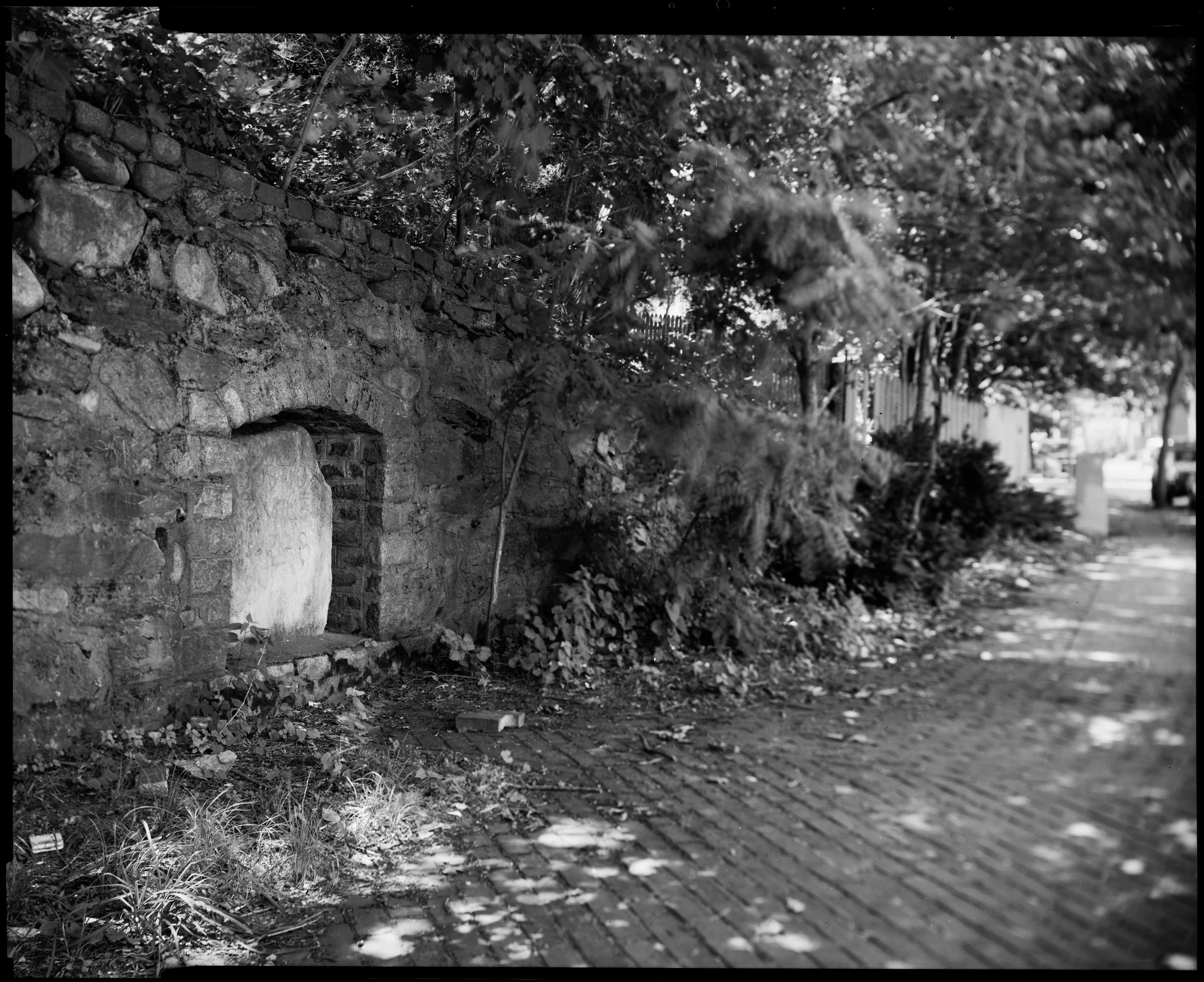
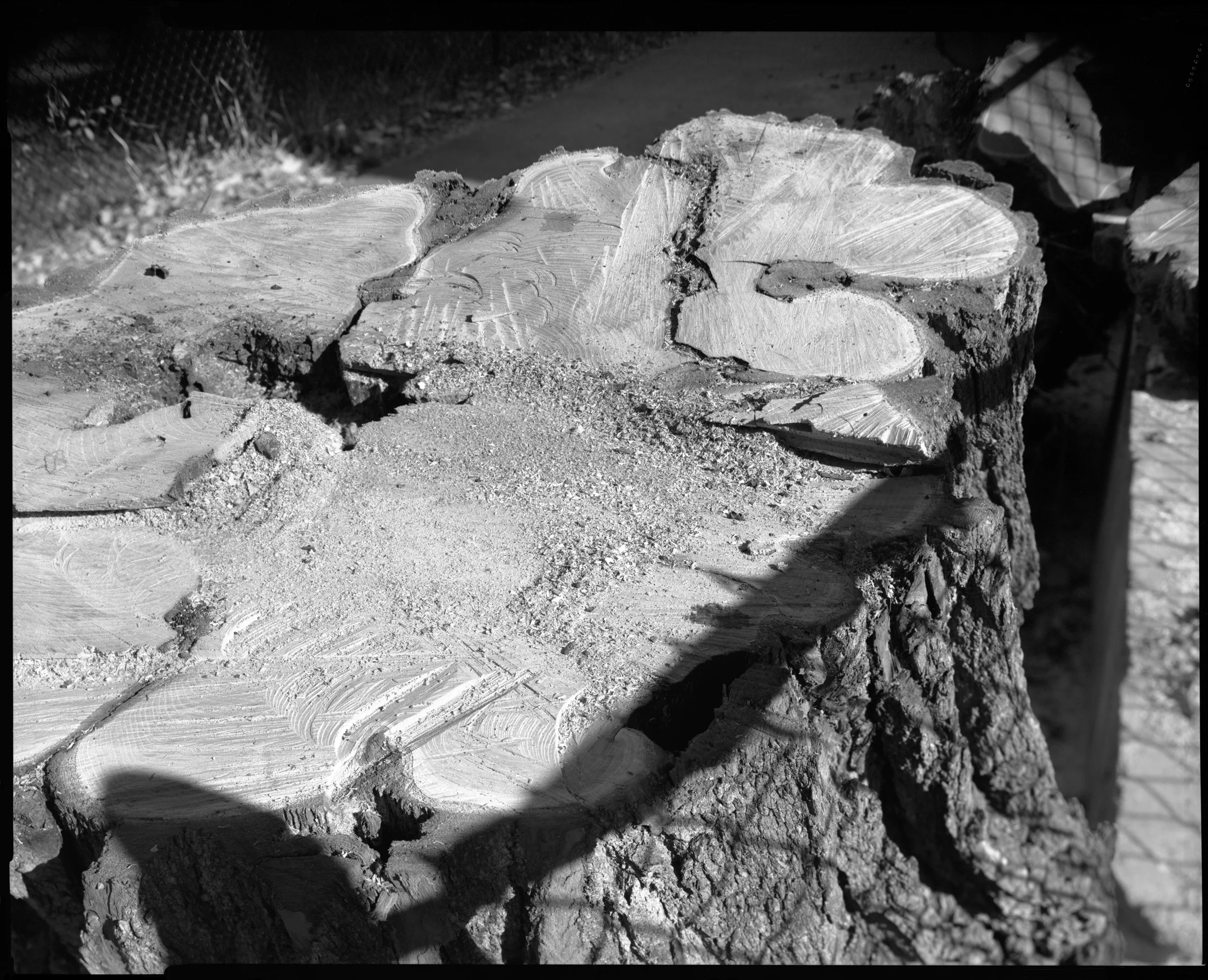
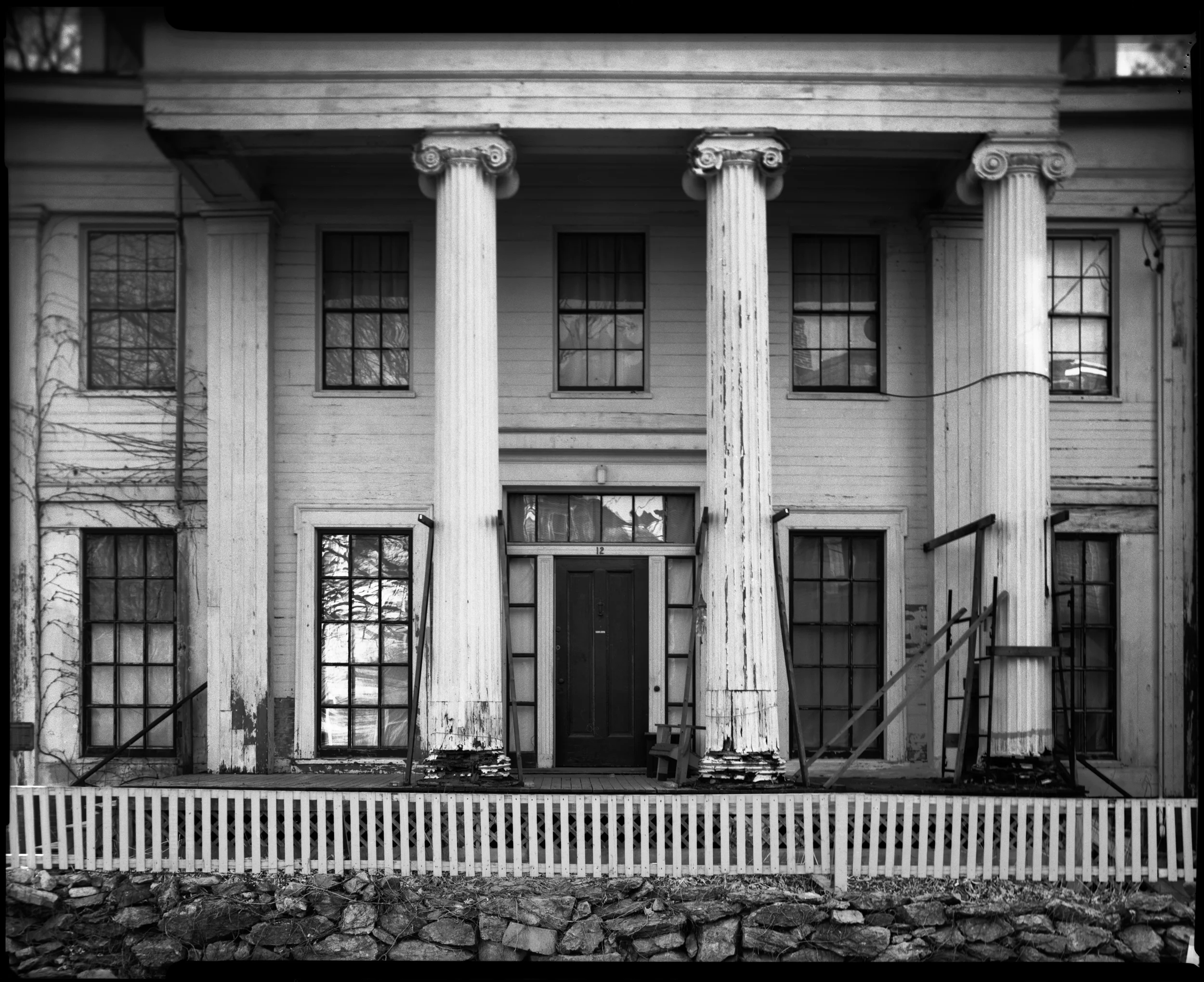
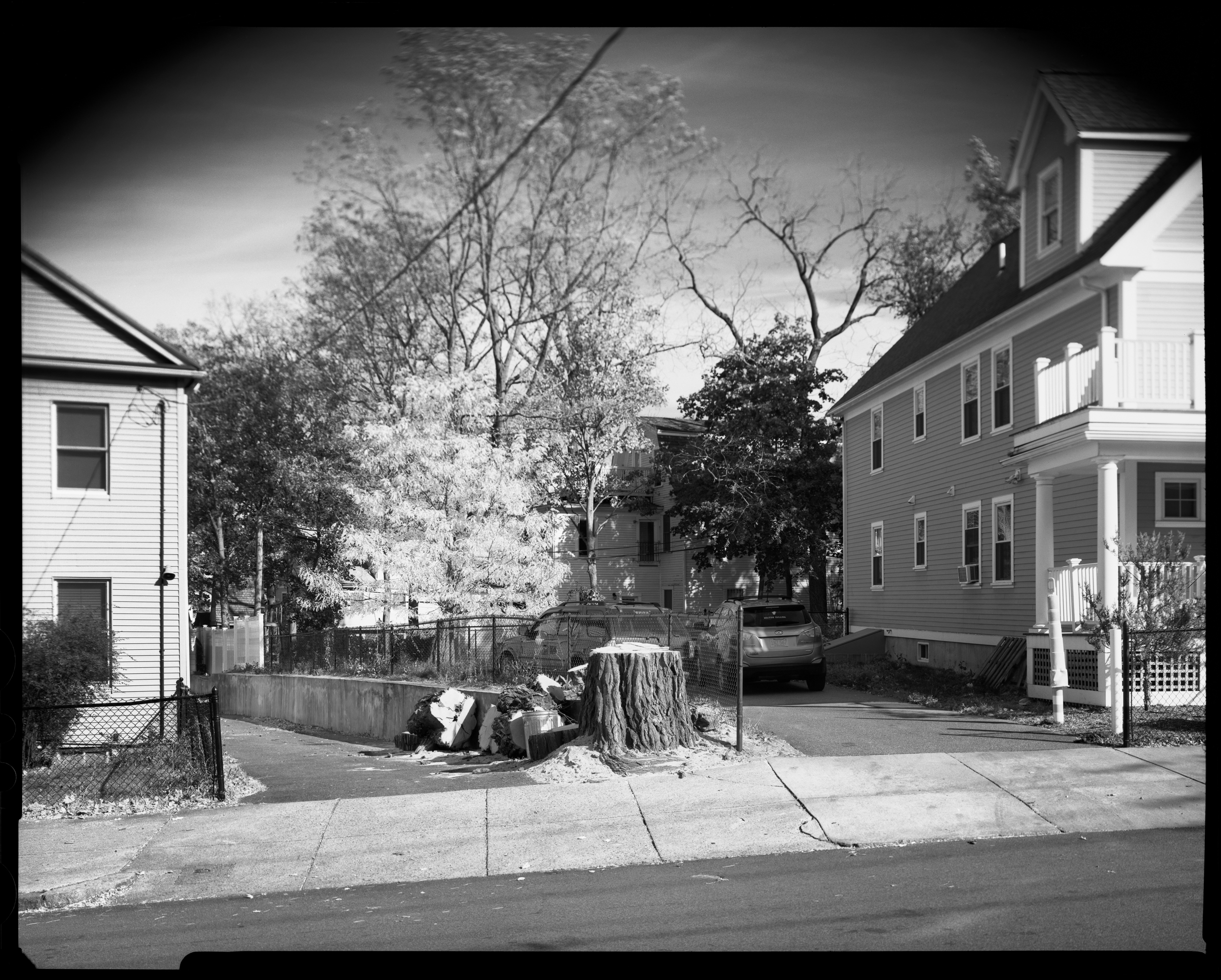
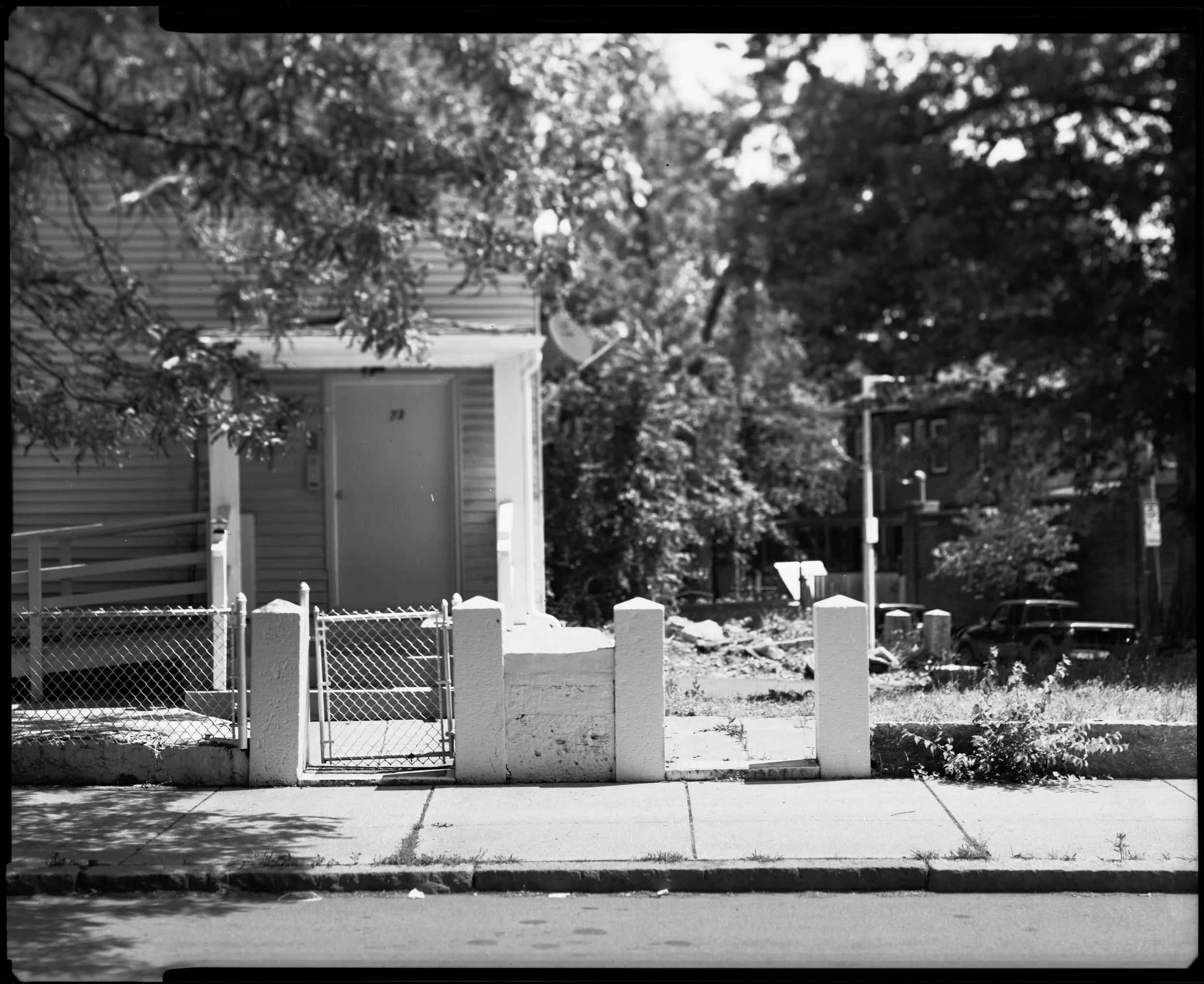
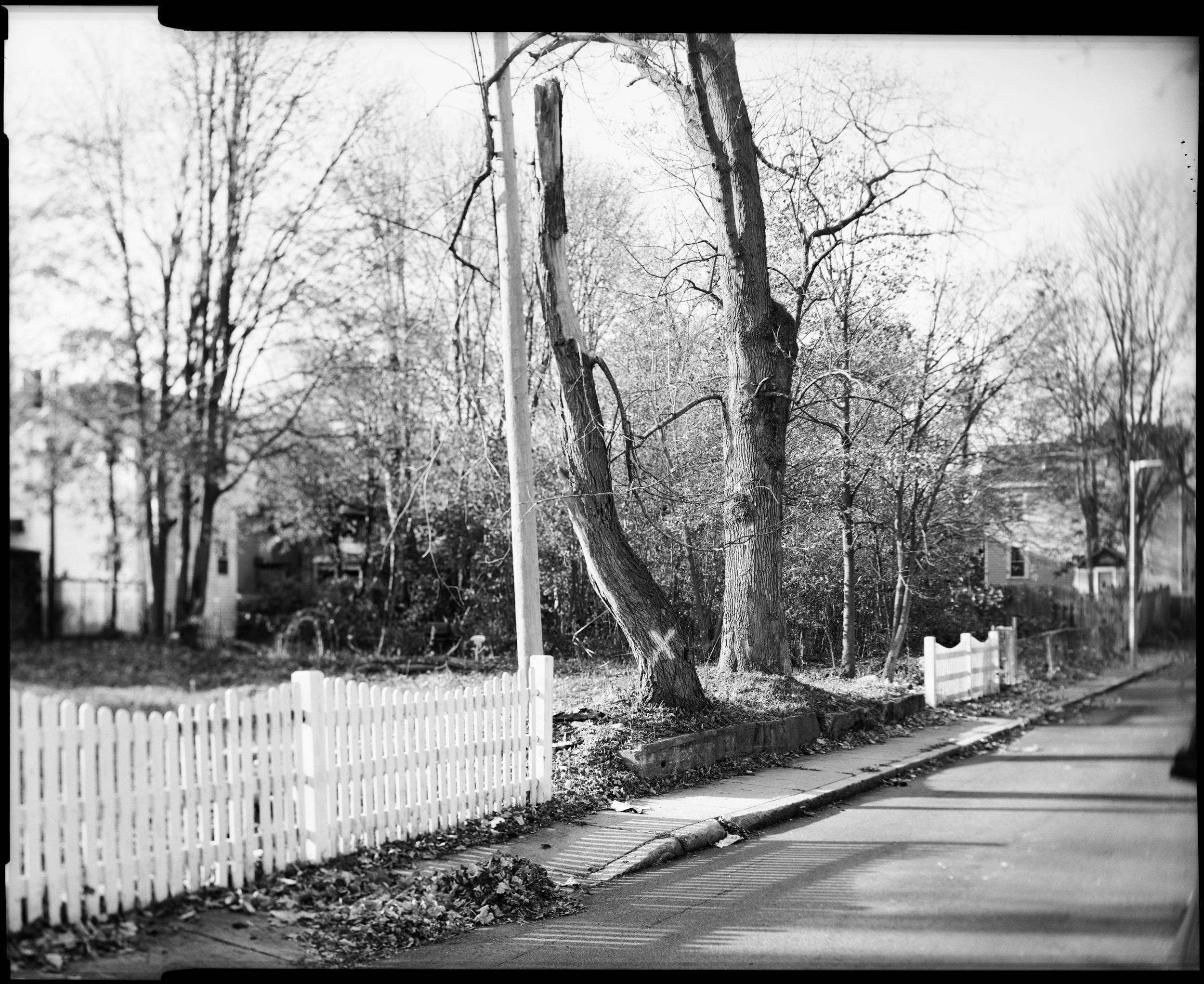
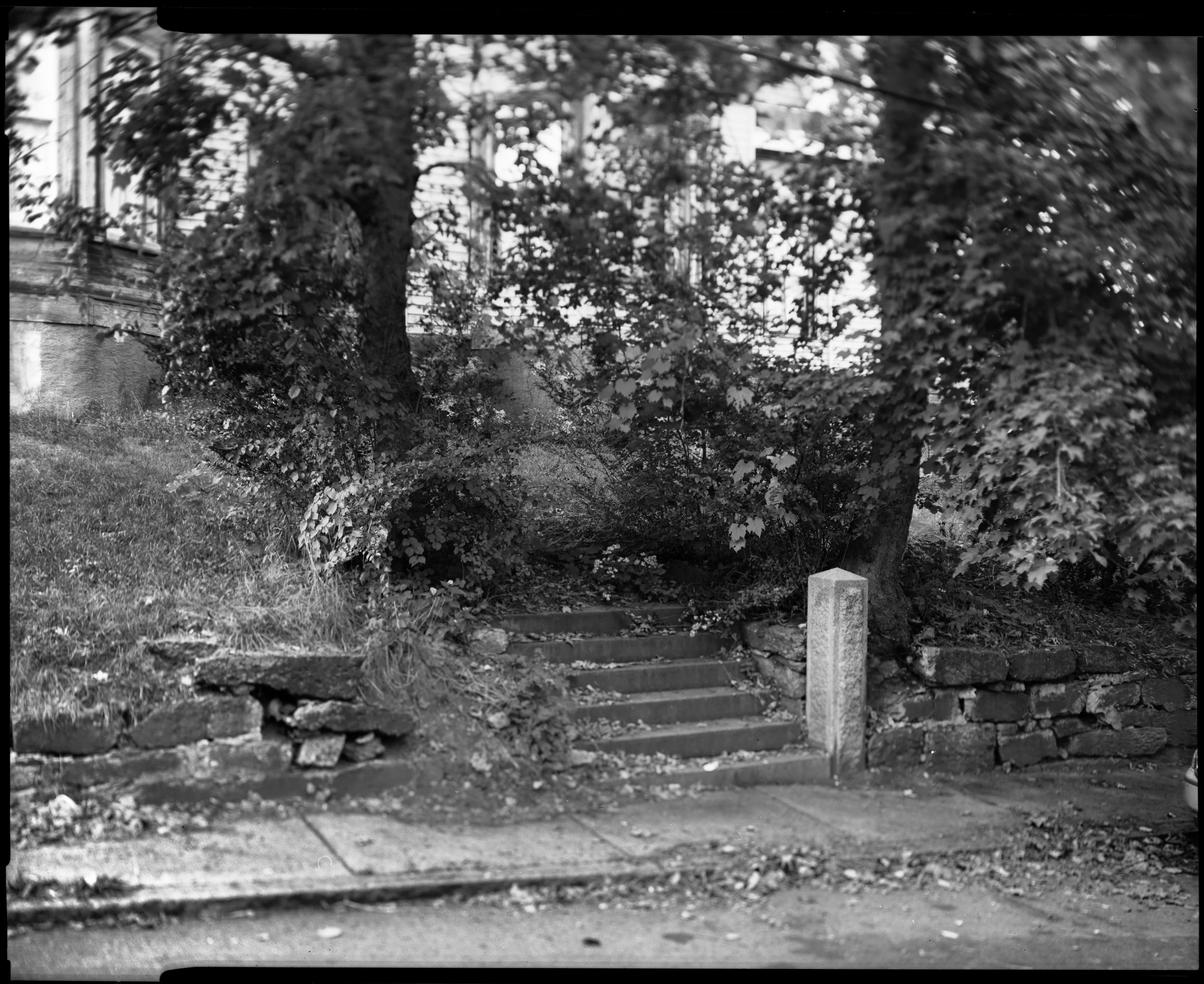
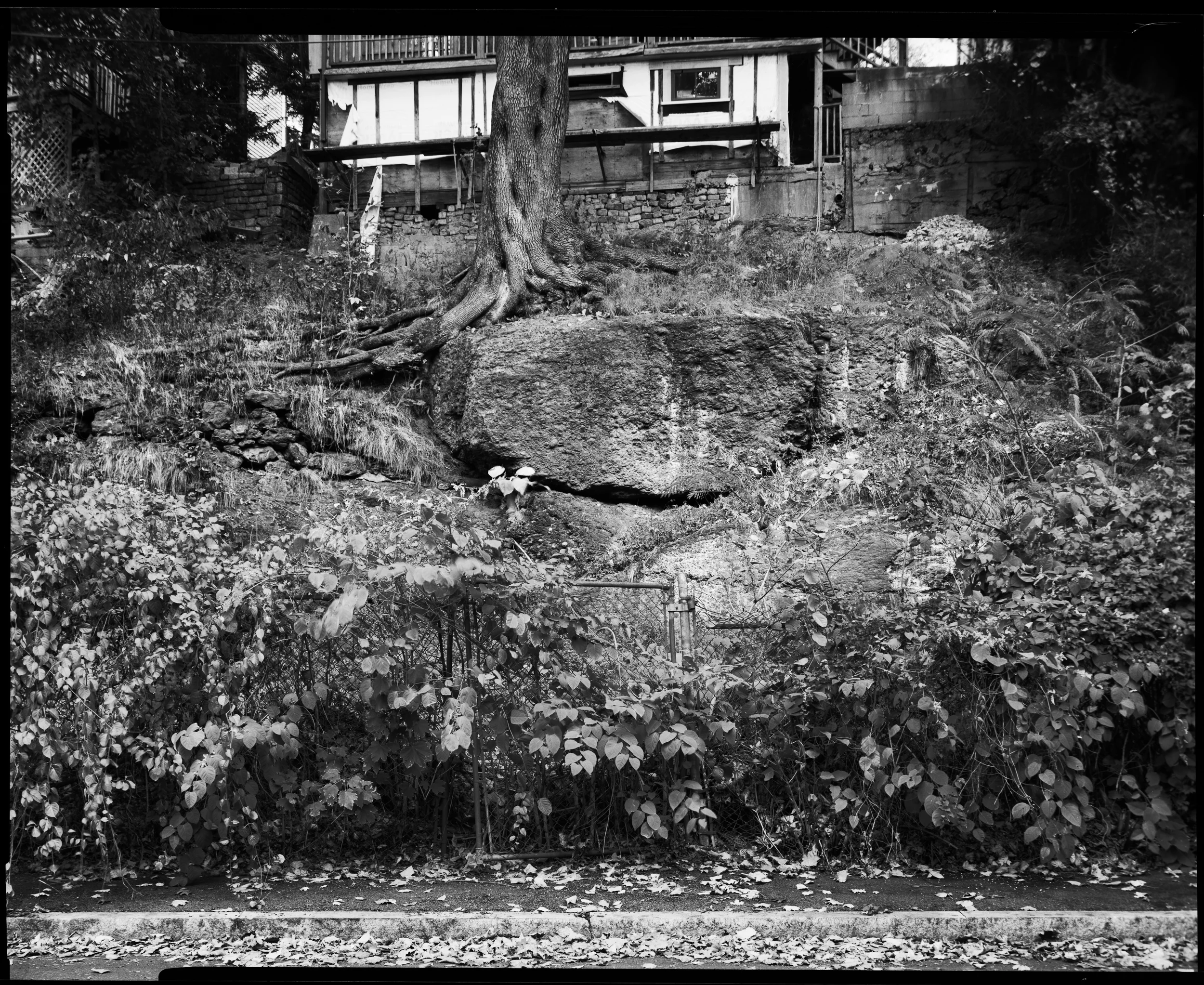
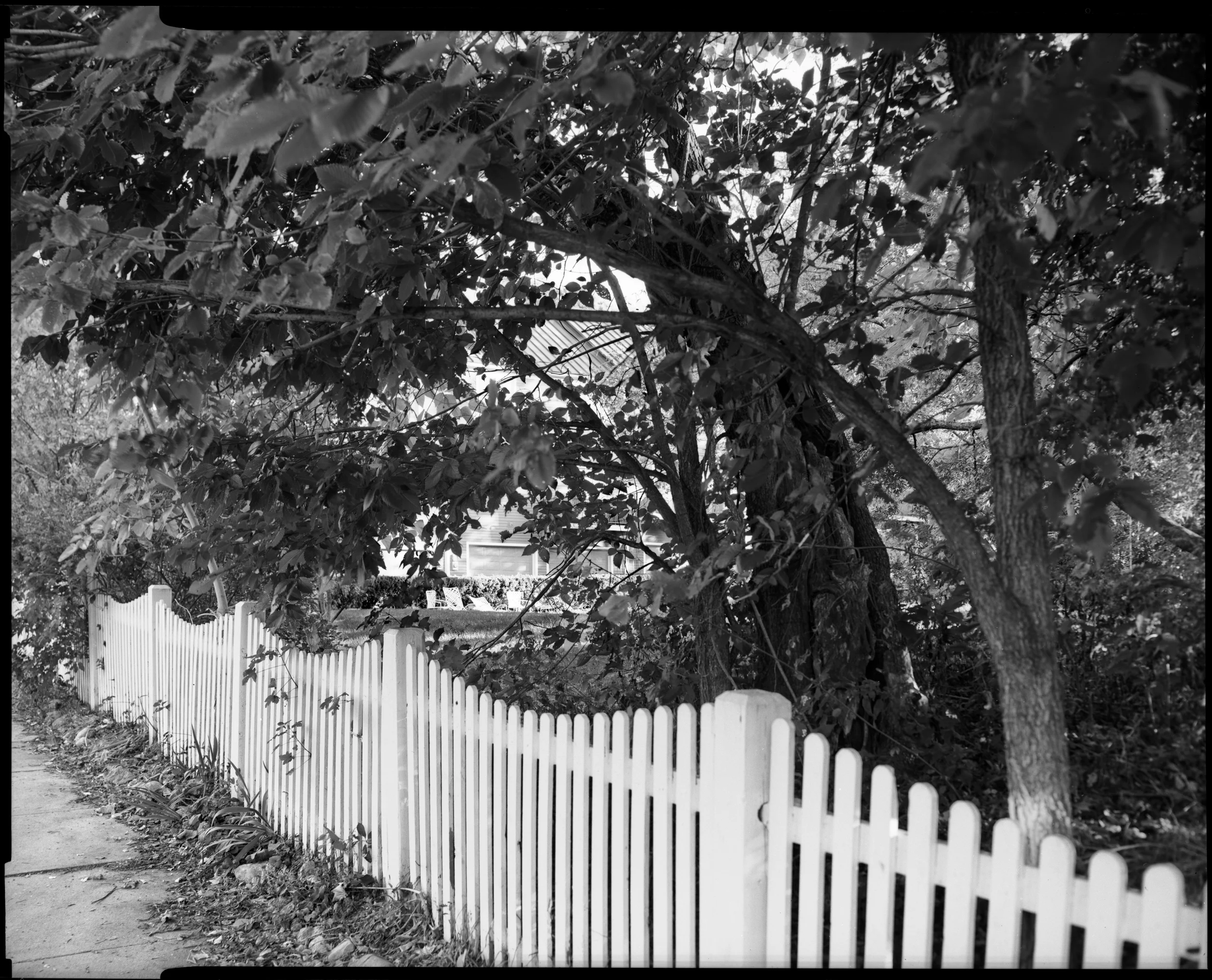
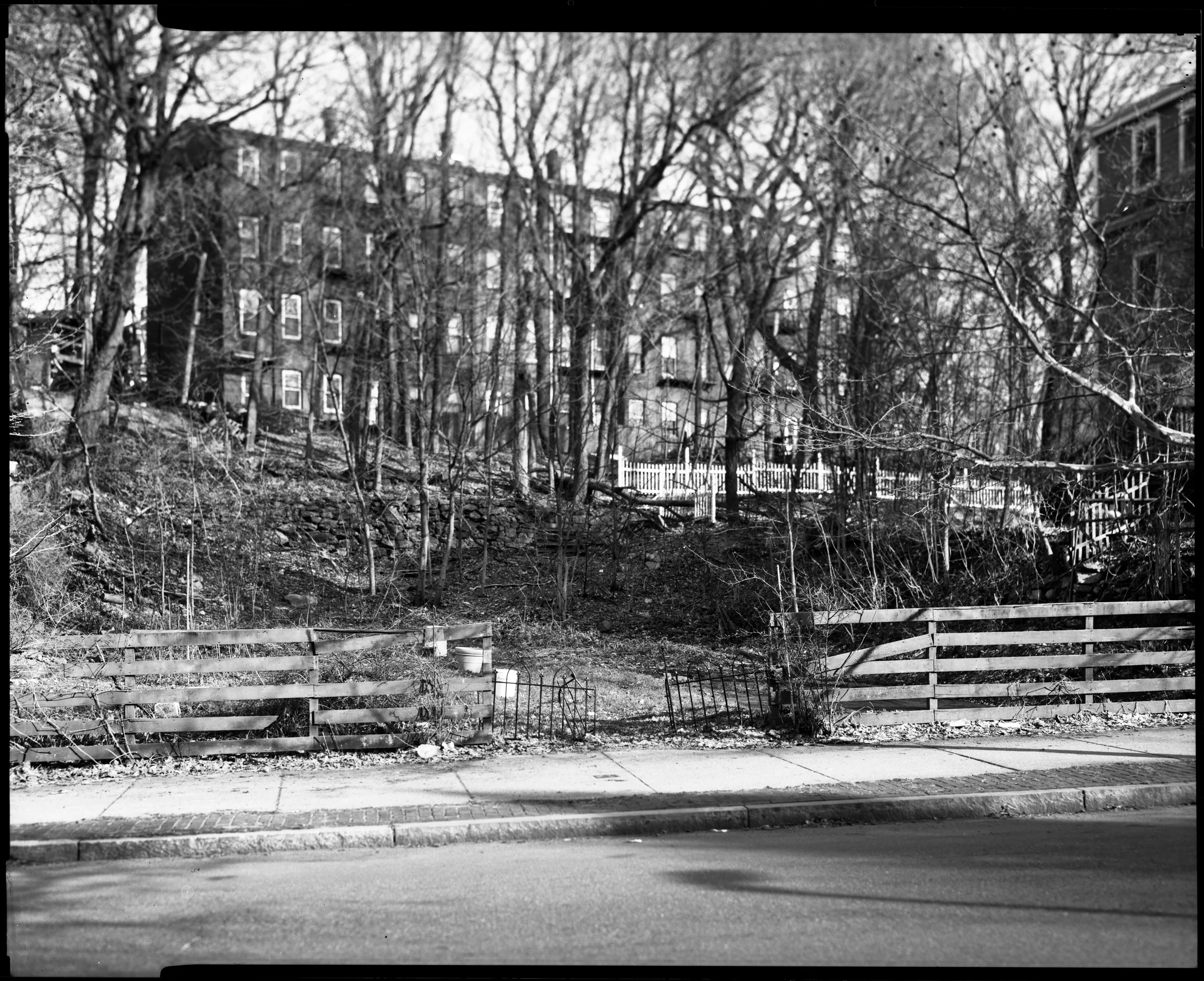
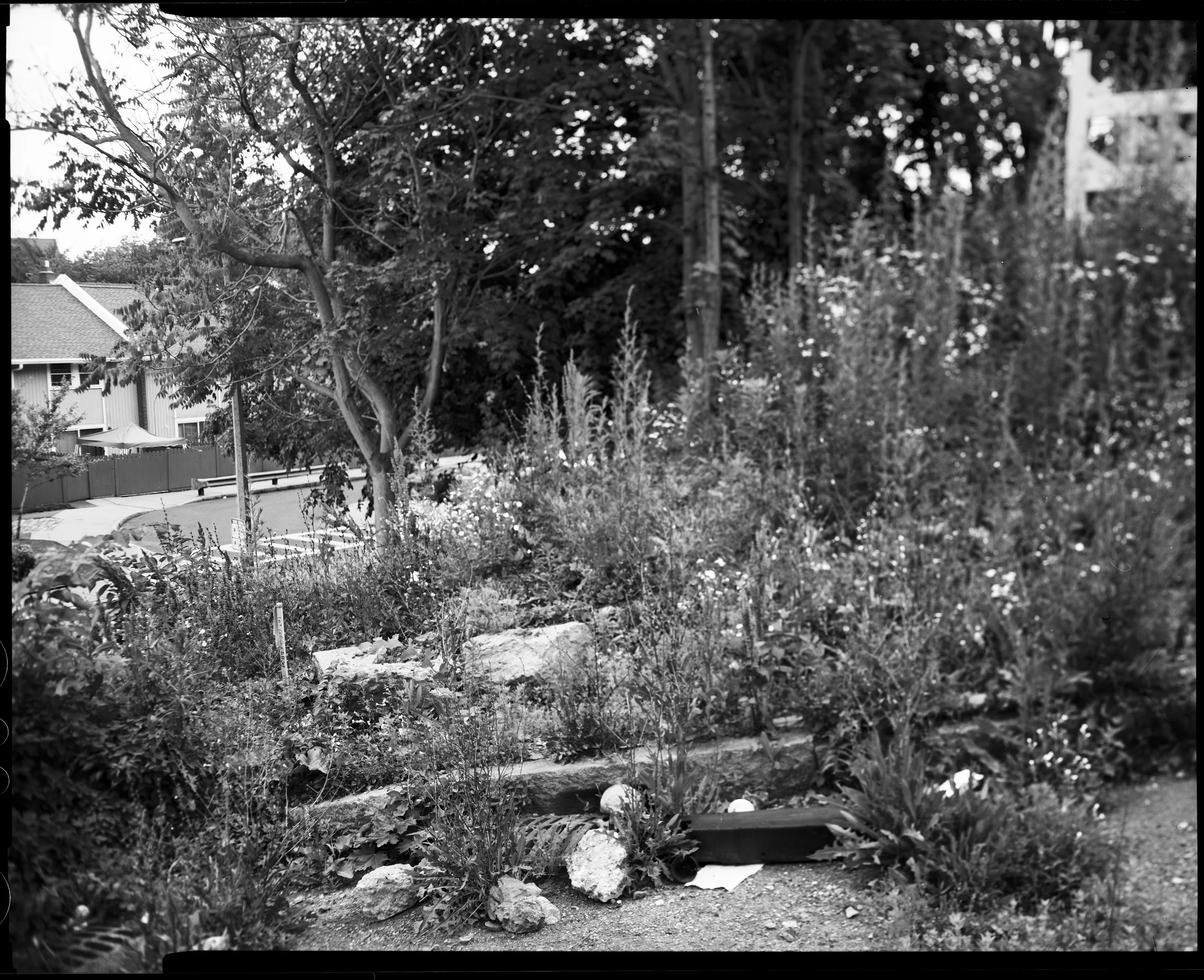
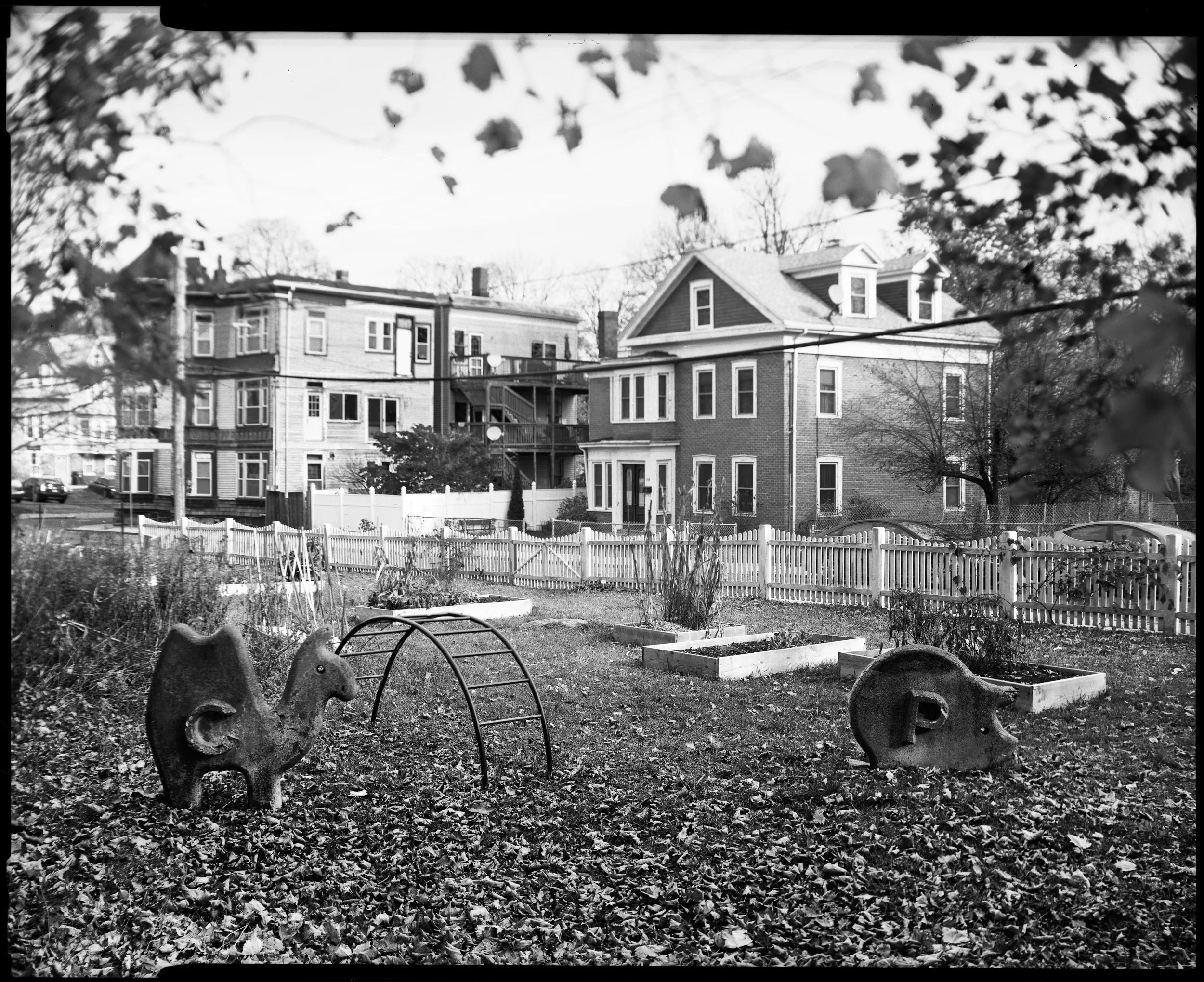
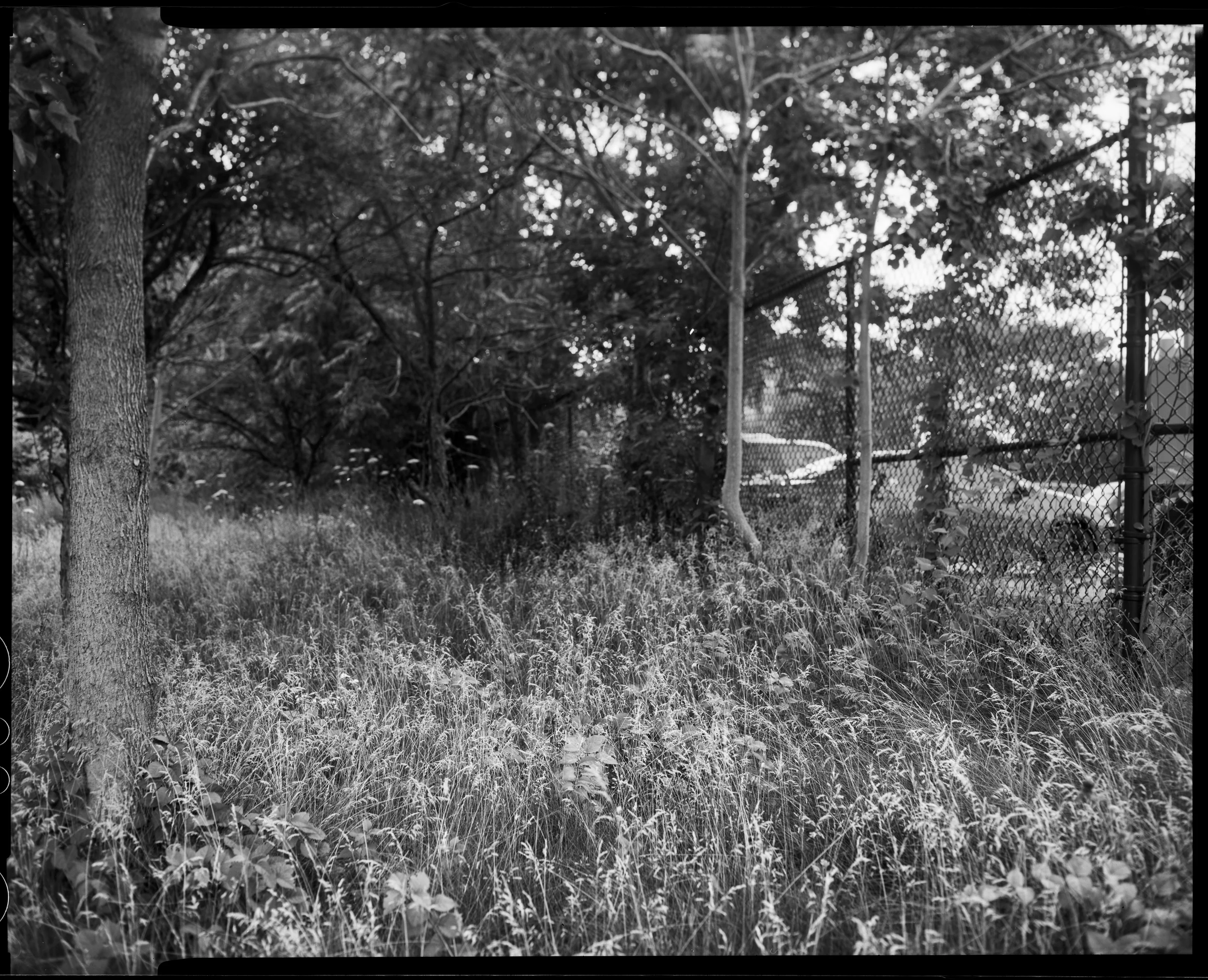
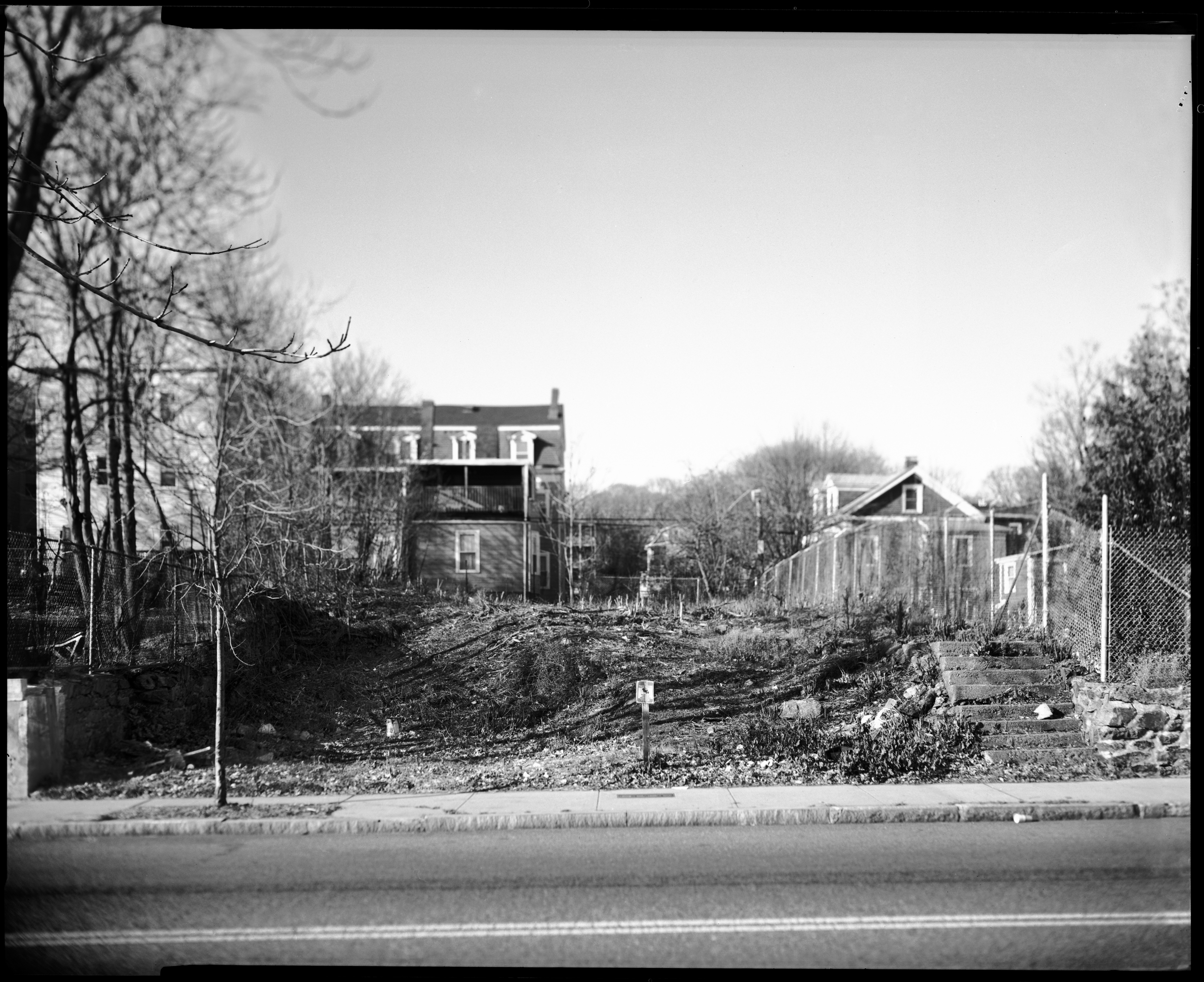
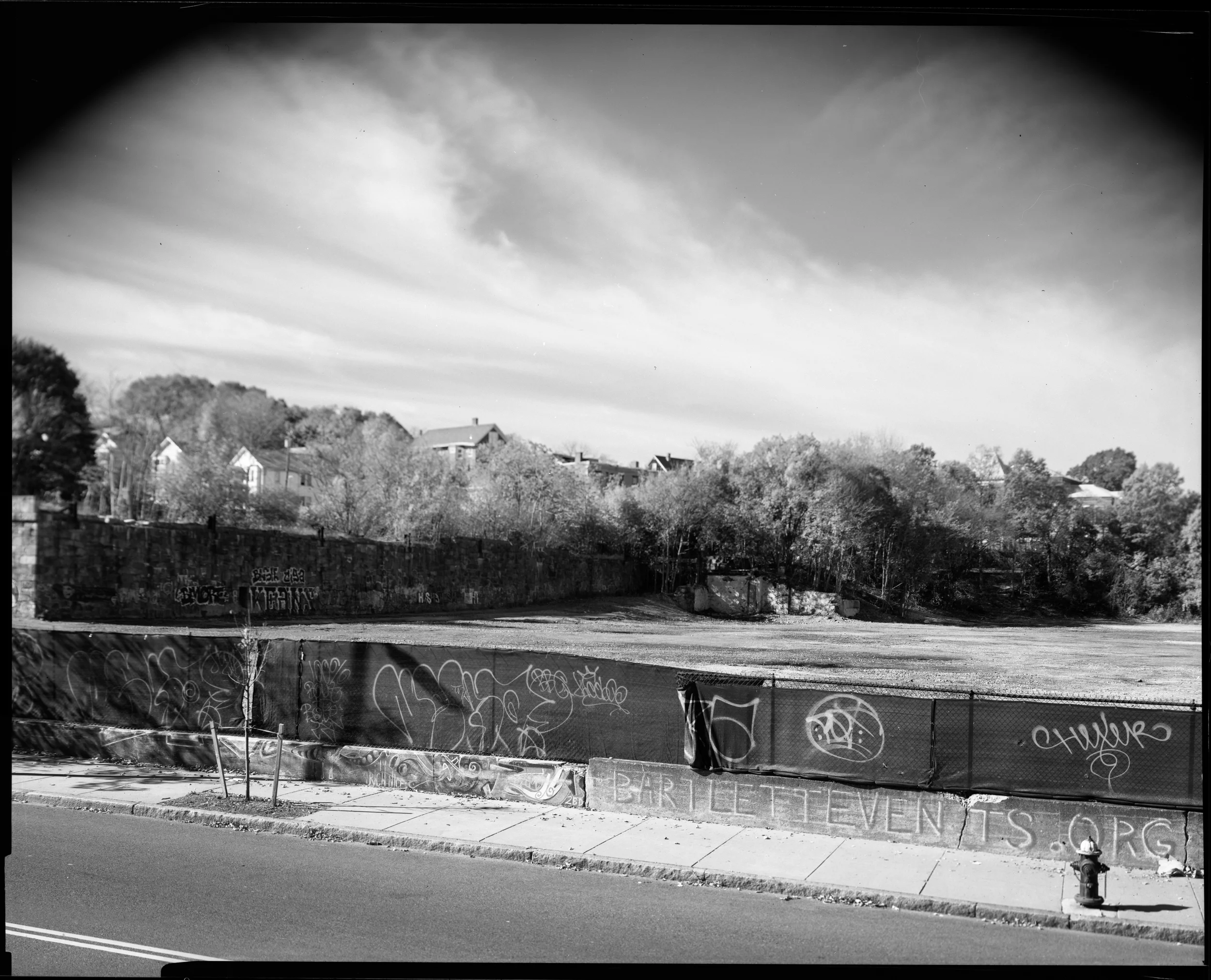
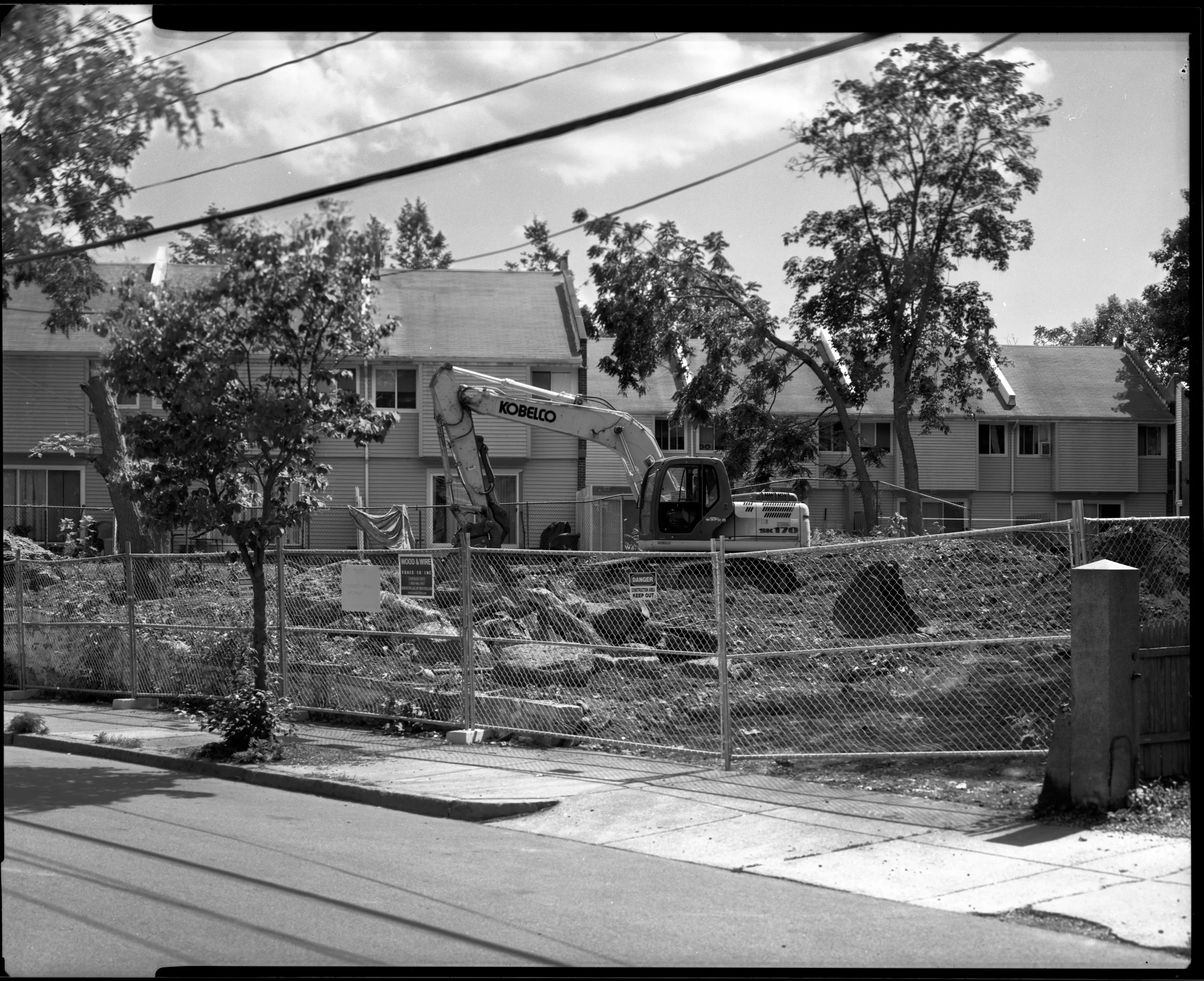
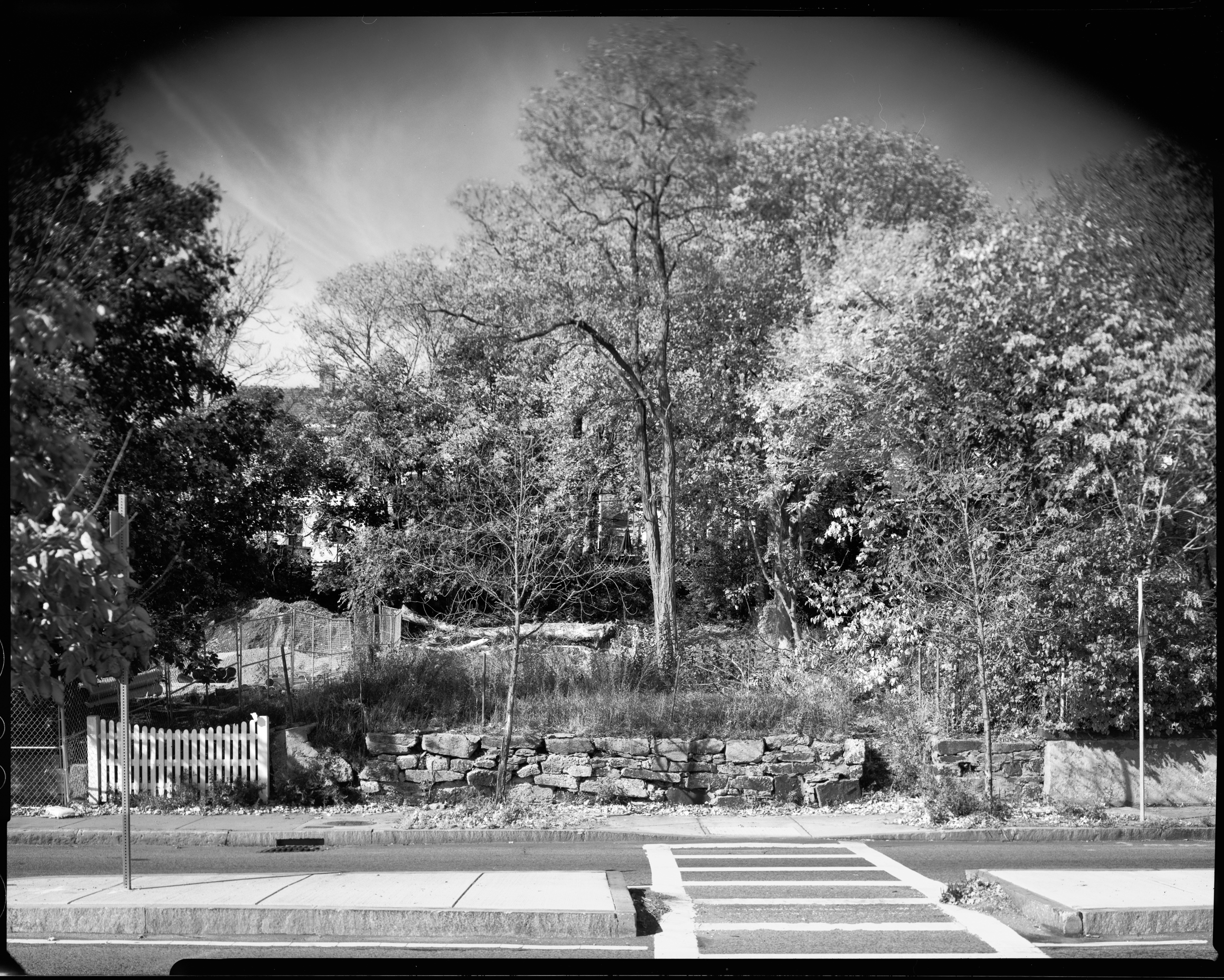
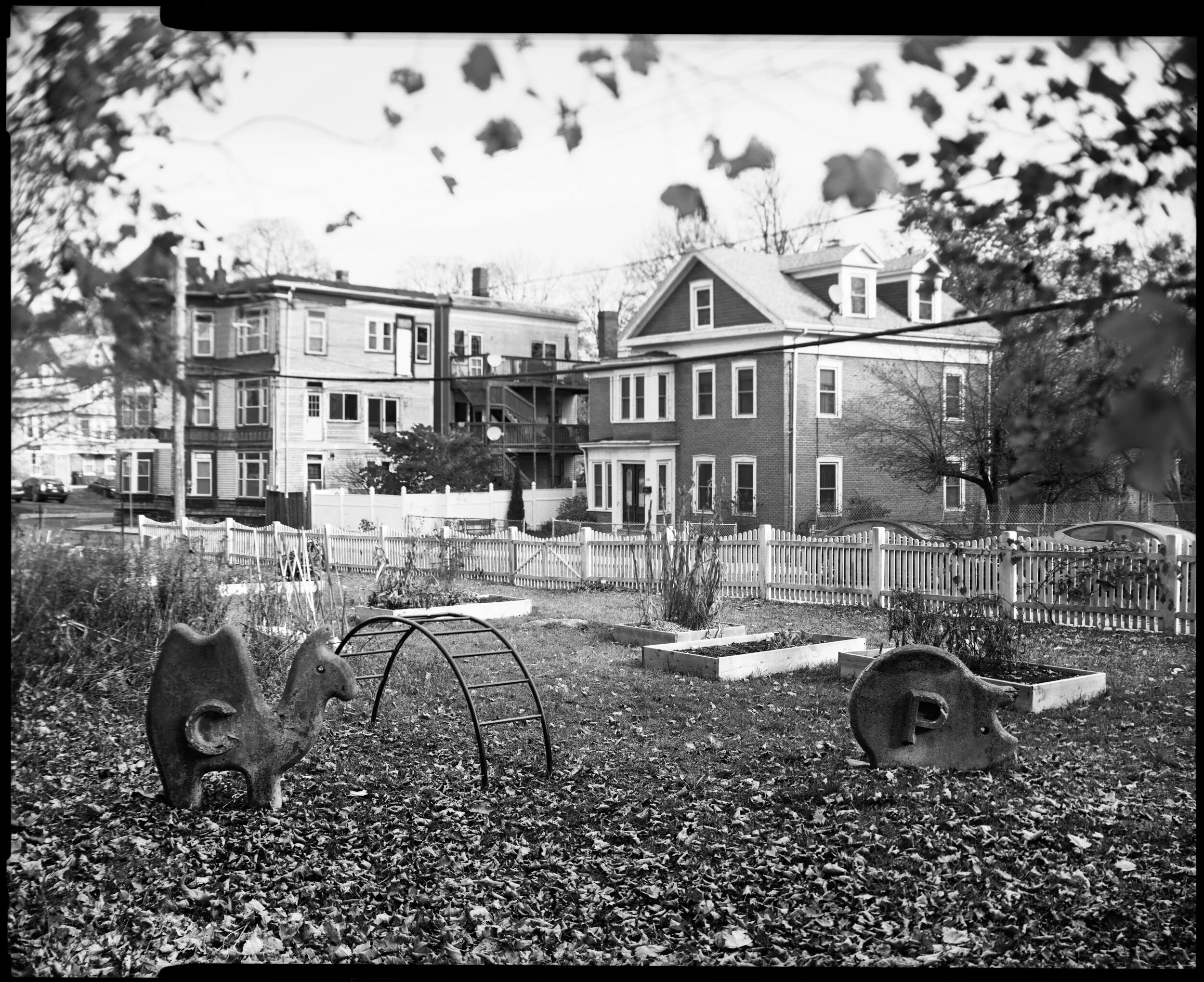
Composed of large format black and white landscapes “Disturbance History” searches for metaphors in the land that depicts dwelling, signal the passage of time, and mark the boundaries that divide us.
Disturbance History seeks to illuminate the history of the Fort Hill section of Roxbury, a neighborhood of Boston. Economically abandoned and overgrown, Fort Hill contains many open and wild spaces, community gardens and abandoned lots. These sites are the result of the tumultuous and racially charged 1960’s and 70’s, during which redlining, blockbusting, white flight, and urban renewal disrupted old residential patterns. Resorting to arson as a means to collect the insurance on their undervalued homes, white residents left in droves. Low property values, wary bankers, and speculating developers held onto these lots with little intention of developing them, letting them go fallow; to be claimed equally by contractors dumping garages as by nature.
Thanks to dedicated community activists, many of these lots have been converted into protected urban wilds, open community spaces, and survival gardens. Yet many of them remained abandoned and disabused; traces of Victorian era stone walls mingle with the urban wilds taking their place. Foundation stones appear intertwined with trees coppiced from repeated cuttings, and white picket fences mark property lines: questioning the boundaries that keep so many from the American Dream. The poet Robert Frost said “good fences make good neighbors”, but here fences mark division. These lots are now receiving renewed attention as the neighborhood’s demographics again begin to shift. Fort Hill is now becoming more diverse, but its new residents bring increased demand for housing, and developers are rapidly building on these urban wilds, replacing them with luxury condos.
These pictures not only suggest their troubled past, but also seek to document these spaces before their evidence is lost. They bear witness to a changing environment. In the act of making these pictures I hope they both stimulate a healing dialog about a history about the life of a neighborhood.