a smaller kind of flood
Flowing through…
a series of hand bound books, a smaller kind of flood, explores the connections between family life and the larger systems that sustain us. By weaving images throughout numerous books, SKF, reassembles the systems of photography, art books, art history, and experience into a lucid page turner.
The project - A Smaller Kind of Flood - is composed of six hand bound photobooks. Each Book is sized to 8x10”. Titles include: The Book of Systems, The Book of Equivalences, The Book of Walking, The Book of Life, The White Book, and Anderson Ranches. Each book is intended to stand on its own but also to be highly integrated with the other books. While each book contains unique images, they also share, pursue, and reinterpret images across the entire series.
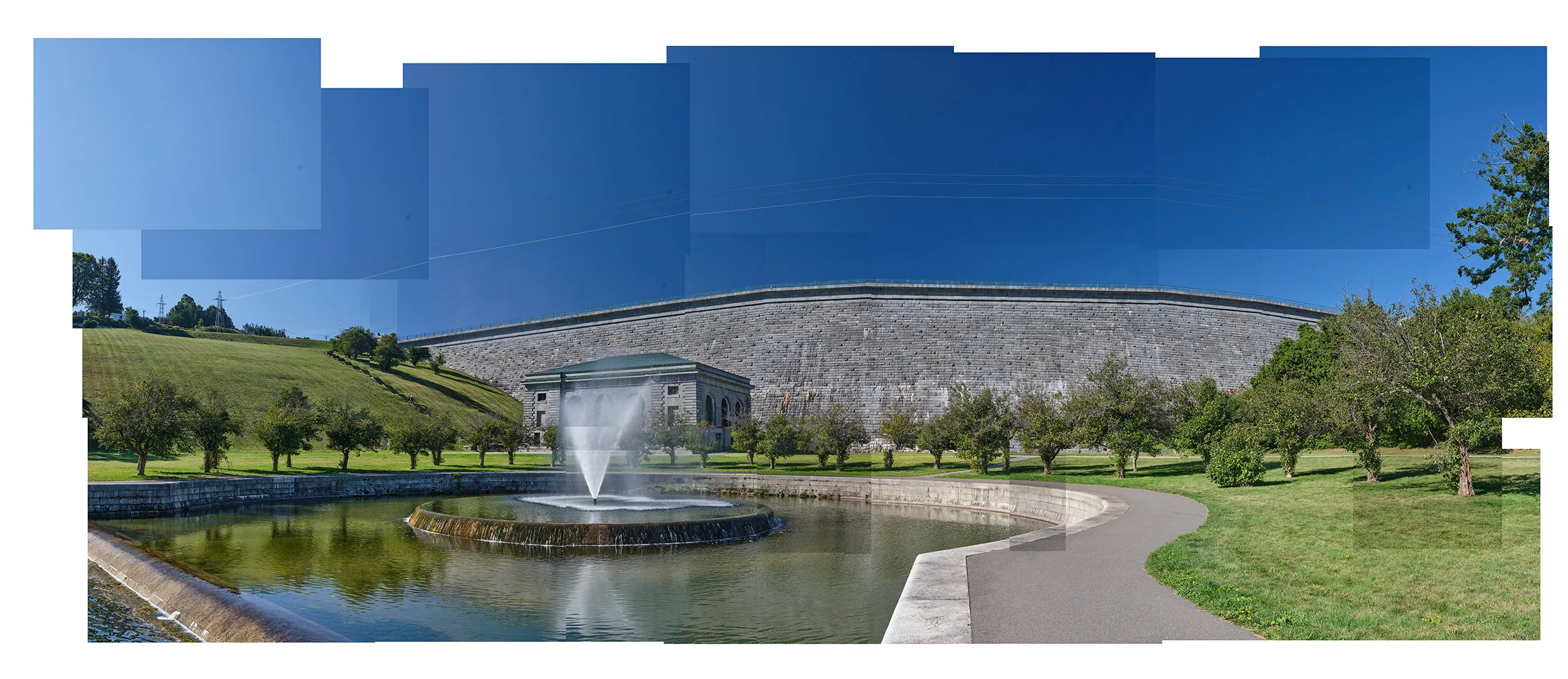
A Smaller Kind of Flood flows through the aqueducts that sustain the Boston metro area. When my son was born and my family moved to our first house near the aqueduct that supplies water to the Boston Metro area my interest peaked and I had to learn more. Asking the question: how can these flows connect people to place and to the lives lived in cloistered homes. In pursuit of this topic the idea of rupture and flow came forward. Connected both to the flow and rupture of water as a resource, but also as connected to daily life, and to the systems that sustain and inhibit that life.
A Smaller Kind of Flood reflects on how these systems are both shaped by settlement, and in turn shape the development of residential patterns, home, and family. This theme of transmission systems extends to the book format where the book is taken as itself a system opening flows and ruptures of information. Flows between the history of photography and contemporary experience. Flow and rupture as a process of walking and photographing. Flow between image and idea. Being in the flow of things as a process of making a work of art. Listening to the images and being carried by them while simultaneously rupturing the flow through the imposition of my own preconceptions. Beyond its immediate topic SKF is about the process of production, about making connections, taking them apart, and making new ones; about connections being made in the mind of the reader, taking them apart, and making new ones.